
Reaction to fire describes the contribution a construction product makes to fire development, under specified test conditions. This includes characteristics such as ignitability, flame spread, heat release, smoke production, and the formation of flaming droplets or particles.
In the UK and across Europe, reaction to fire classification is defined in accordance with BS EN 13501-1. This standard establishes a harmonised classification system for construction products, based on results obtained from standardised reaction to fire tests.
The classification applies to products and materials, assessed in relation to their intended end-use application. It does not assess the fire performance of complete façade, wall, or building systems, which are evaluated using separate system-level test methods.
Reaction to Fire Classification (BS EN 13501-1)
BS EN 13501-1 classifies construction products using:
- Reaction to fire classes: A1, A2, B, C, D, E or F
- Smoke production: s1, s2 or s3
- Flaming droplets or particles: d0, d1 or d2
Example classifications include:
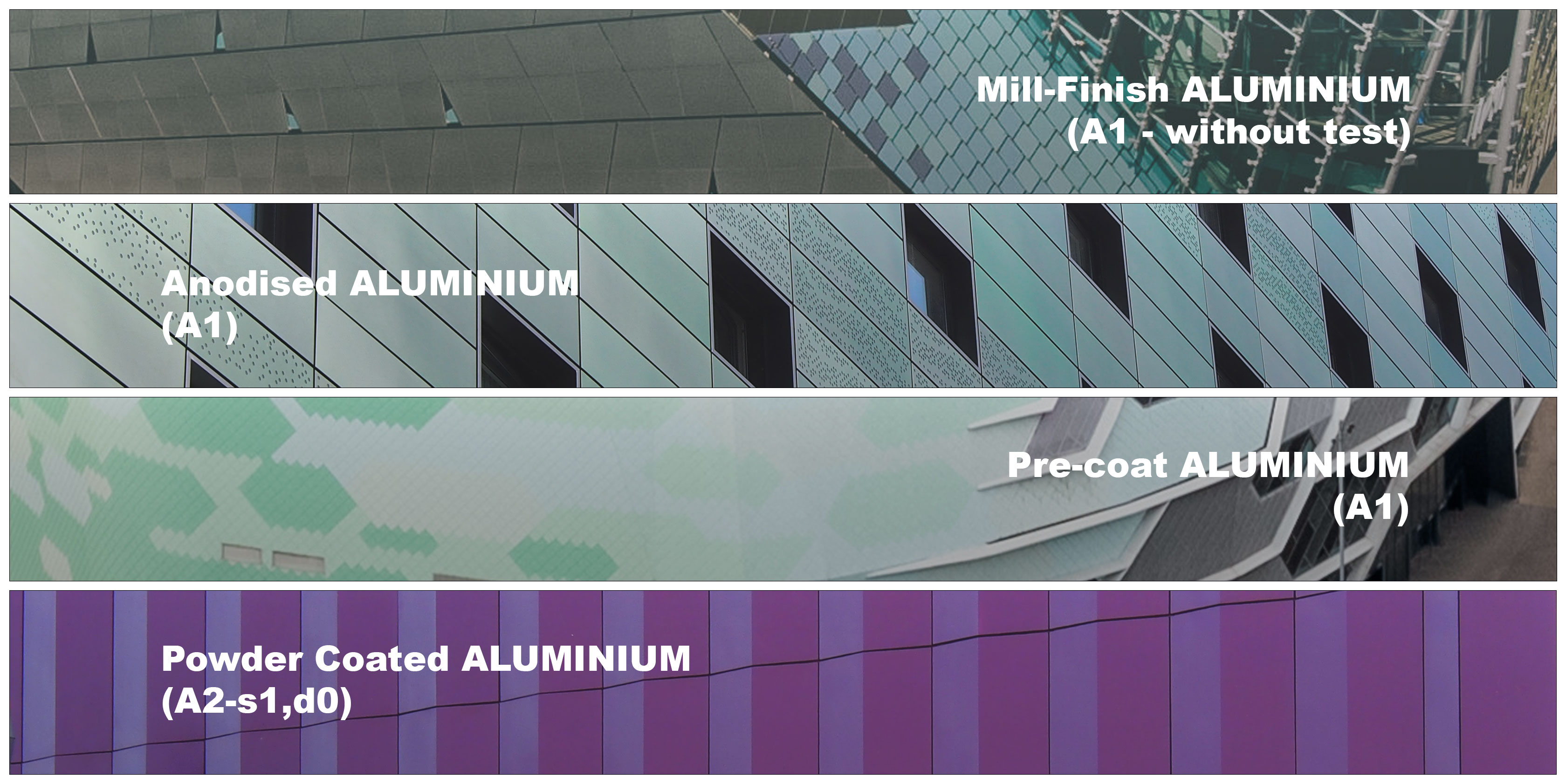
- A1 – No contribution to fire under defined test conditions
- A2-s1,d0 – Limited contribution to fire, with low smoke production and no flaming droplets or particles
These classifications describe the reaction to fire performance of the tested product only, within the scope, field of application, and limitations defined by BS EN 13501-1.
Our Role as a Fabricator
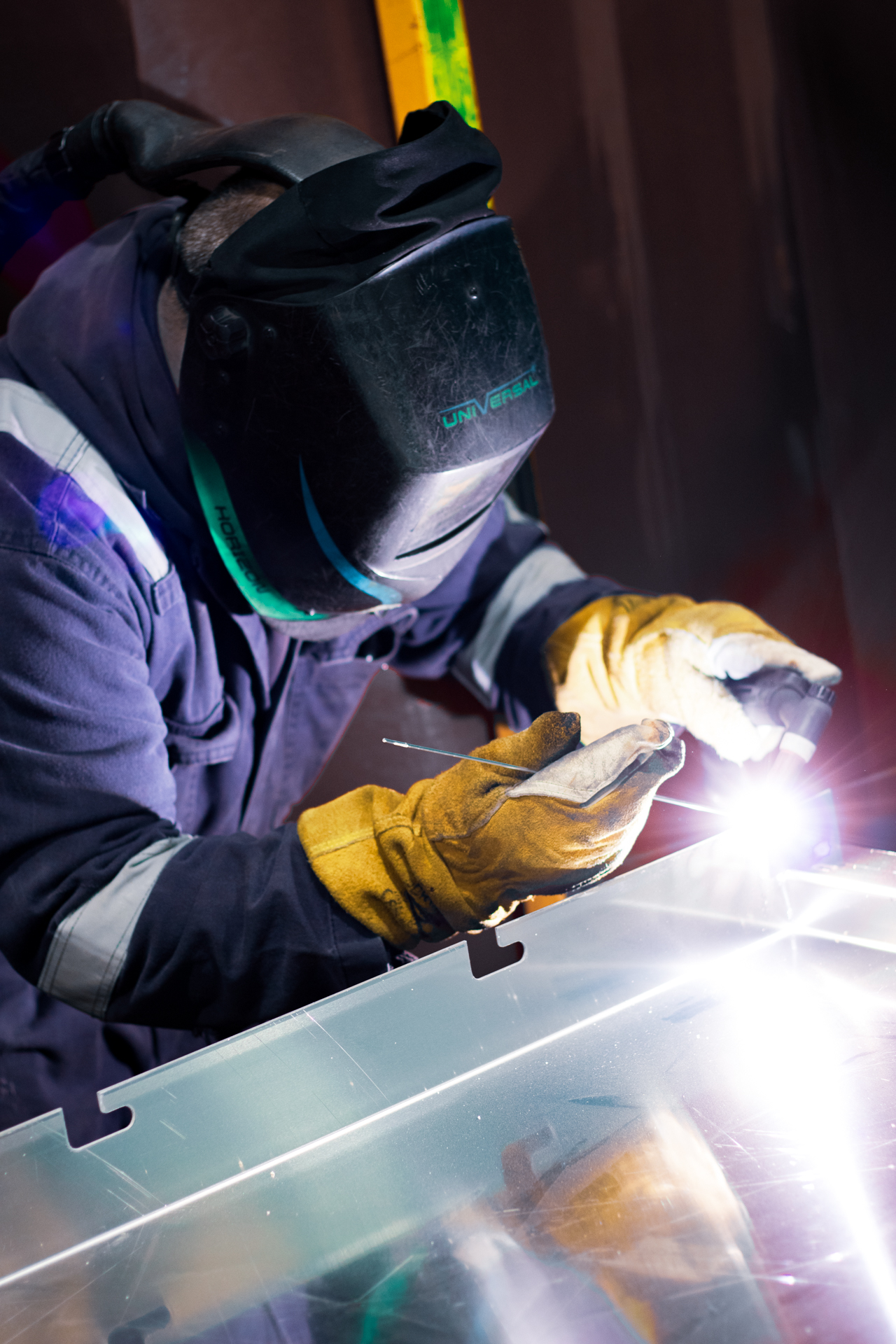
Gilmours is a specialist manufacturer of architectural metalwork.
We do not certify fire performance. Our role is to support compliant design and delivery through responsible fabrication and coordination.
We do this by:
- Fabricating components in accordance with architect and consultant specifications
- Working with materials capable of achieving specified reaction to fire classifications, where required
- Manufacturing strictly in line with approved drawings and schedules
- Supporting traceability and documentation, where specified as part of the project requirements
Our experience includes façade components, cladding elements, support systems, and bespoke metal fabrications used within fire-conscious building envelopes.
Materials, Finishes and Verification
Reaction to fire performance depends on multiple factors, including the base material, applied finishes or coatings, and the manner in which a product is fabricated and installed.
Materials and finishes do not perform uniformly. For example, aluminium-based products may achieve different reaction to fire classifications depending on surface treatment, coating build-up, and the supporting test evidence available for the specific product configuration.
For this reason, reaction to fire performance should always be confirmed on a project-specific basis, in coordination with the design team and material suppliers, using appropriate test data and classification reports.
Fabrication and Assemblies
Where components are manufactured as assembled or stiffened elements, material selection and fixing methods are considered carefully. Our standard approach is to use metallic substrates and mechanical fixings, avoiding the introduction of materials with different or unknown reaction to fire characteristics, unless specifically detailed within the design.
Important clarification
We form part of the overall construction build-up, working alongside the wider project team. Our responsibility is to fabricate accurately and responsibly, in line with the technical intent, specifications, and product classifications defined for the project.
Fire test evidence relating to complete wall or façade build-ups applies only to the specific tested configuration and should not be assumed to represent the performance of individual products in other applications.
Compliance Disclaimer
Reaction to fire classifications are derived from standardised laboratory testing and apply only to the specific product configurations tested, within their declared field of application.
They do not represent the fire performance of complete systems or buildings.
Confirmation of compliance for any specific project remains the responsibility of the design team and appointed fire specialists.
Talk to us
If reaction to fire is a consideration on your project and you require a manufacturing partner who understands compliance, documentation and technical accuracy, we’re happy to discuss how we can support your design and delivery.